Sourdough Rolls
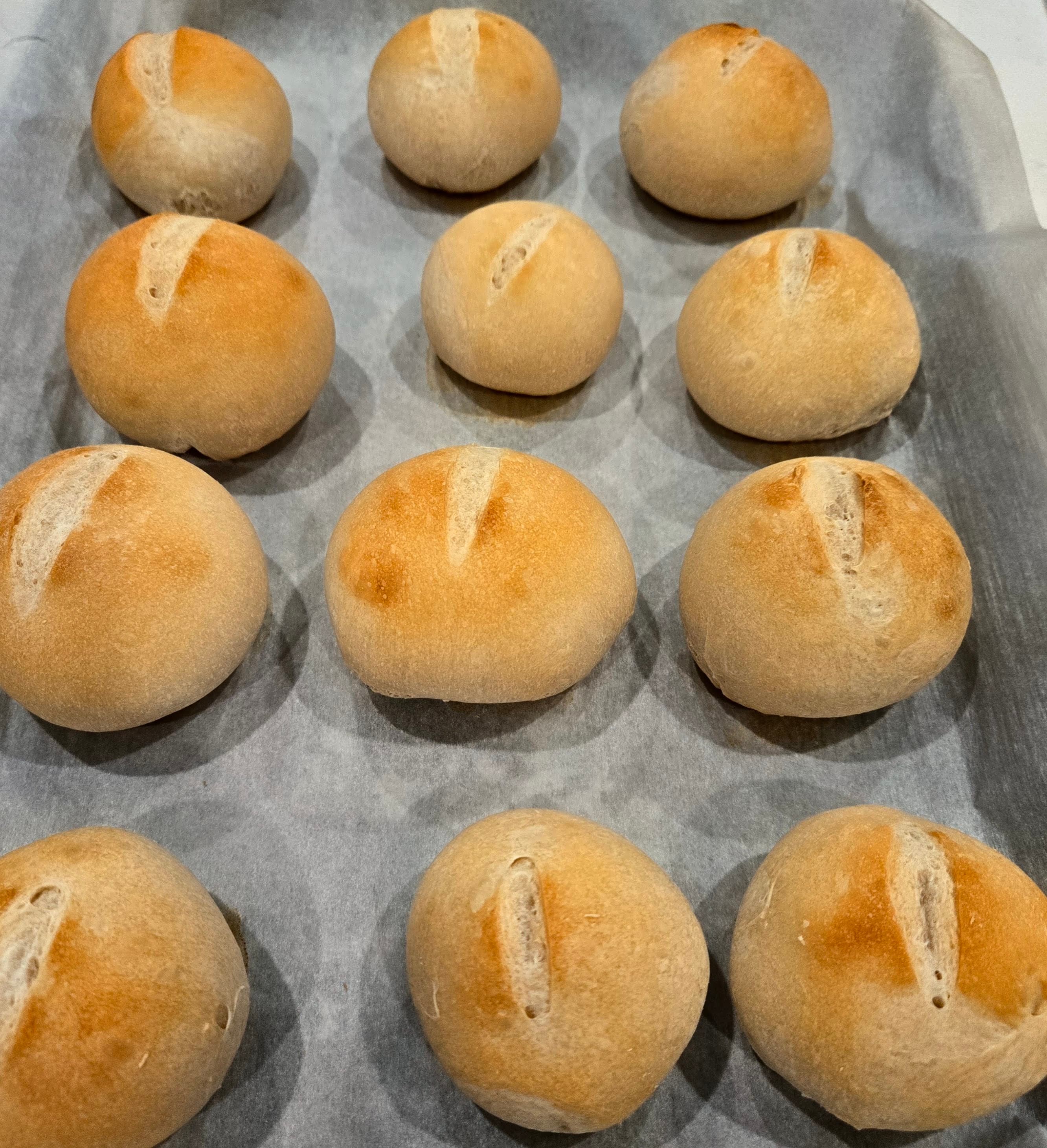
- bread flour360 g
- all-purpose flour80 g
- whole wheat flour (or dark rye flour)60 g
- room-temperature water320 g
- active, bubbly sourdough starter (peaked or just past peak)80 g
- fine sea salt11 g
- granulated sugar (optional, for crust browning)10 g
- Cornmeal or semolina flour, for dusting
Instructions
Method 1: The "Cold Bulk" Strategy (Zero Extra Footprint) Instead of letting the dough double on the counter and chilling it shaped, run the majority of the bulk fermentation directly in the refrigerator.
- Short Ambient Start: Mix the dough and complete your stretch-and-folds at room temperature over the first 90 minutes to establish the gluten matrix. Stop bulk fermentation when the dough has risen only 20% to 25% (roughly 2 hours total room-temp time).
- Compact Cold Bulk (24–48 Hours): Transfer the dough into a straight-sided, tall 2-quart container (or standard round mixing bowl) with an airtight lid. Place it in the coldest part of your fridge (ideally 36°F–38°F / 2°C–3°C) for 24 to 48 hours. Why this works: Because the dough enters the fridge early, the slow drop in temperature allows bacteria to produce abundant acetic acid across the first 6–8 hours without the yeast over-inflating the dough.
- Cold Shape on Bake Day: Tip the cold dough directly onto the counter. It will be stiff and easy to handle. Divide into 12 rolls and shape tightly.
- Final Warm Proof: Place them in your baking pan and let them proof at room temperature for 2 to 3 hours until puffy and aerated before baking.
Method 2: Stiff Levain Build (No Extra Fridge Time Needed) If you don't want a multi-day dough in the fridge at all, force the acidity into the starter build before mixing. Build a Stiff Levain: Feed your levain at a 55%–60% hydration ratio rather than 100%: 20 g starter 60 g flour (mix 50/50 bread flour and whole rye/wheat) 35 g cool water Ferment Cool & Long: Knead it into a stiff ball and let it ferment at a cooler ambient temperature (65°F–68°F) for 10–12 hours until peaked. Result: A low-hydration, cool-fermented levain massively tilts the microbial balance toward acetic acid (vinegar tang) over lactic acid. When you mix this stiff levain into your main dough, you introduce a heavy acidic punch upfront, allowing you to use a standard bowl in your fridge overnight without losing sourness.